Between the Sheets: The Shit Nobody Taught Us About Sex, Pleasure & Our Own Bodies
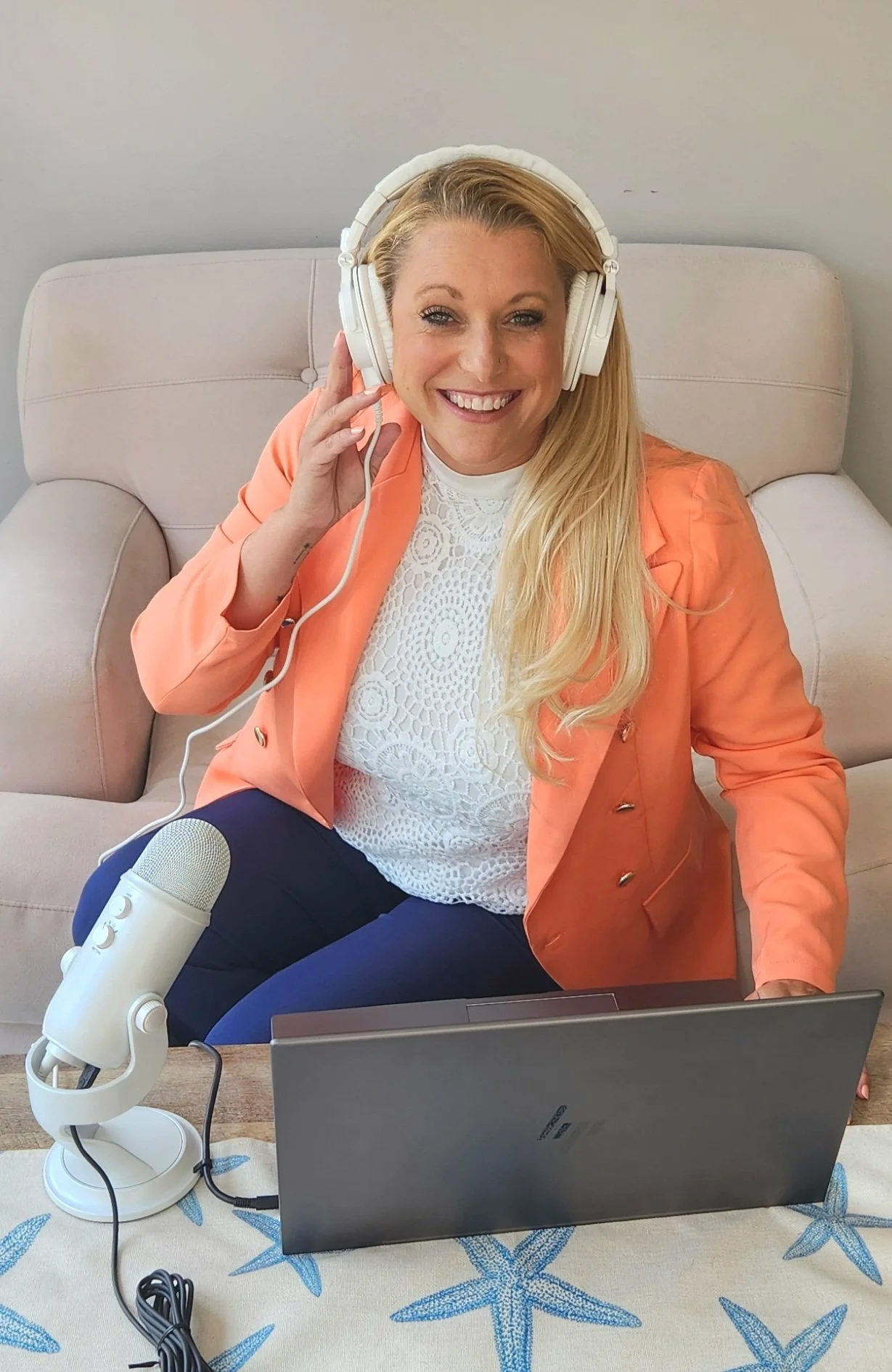
Dr. Stephanie Zwanitzer
There was a time in my life when simply talking about sex could make me cry.
Not because anything terrible was happening.
Just because someone would ask:
“What do you like?”
And my brain would basically blue-screen.
I DON'T KNOW. WHY ARE WE TALKING ABOUT THIS?
Fast-forward to me now, casually sitting behind a microphone discussing hormones, jealousy, non-traditional relationships, orgasms, lube, cuckolding and whether seven people in one bed is your personal boundary.
Growth is weird.
And this conversation with Stephanie Zwanitzer — urology and sexual medicine nurse practitioner, founder of Revive Institute of Sexual Health, and host of Between the Sheets — reminded me just how much my own thinking has changed.
Maybe There Isn't One “Right” Way
My husband and I have a non-traditional relationship.
That is something I can say now without immediately wanting to provide a PowerPoint explaining why our marriage is still valid.
But a few years ago?
I absolutely carried some version of:
Relationships are supposed to look one certain way.
And honestly, I don't think I consciously chose that belief.
Sometimes you're simply raised seeing one version of love, marriage and sex, so you assume that version is the version.
Then one day you realize there are about 47 other doors in the hallway.
Stephanie and I talked about jealousy because I used to assume people in non-traditional relationships had somehow reached Olympic-level emotional enlightenment and simply… didn't get jealous.
Wrong.
Jealousy can still happen.
Meanwhile, my husband is almost annoyingly non-jealous.
There have been moments where I've thought:
Why do you not care?! Do you even love me?!
Because somewhere along the way, I had connected jealousy with love.
Possessiveness with importance.
And maybe those things aren't actually the same.
That was one of those little moments where I realized how many rules we follow simply because nobody ever told us we were allowed to question them.
Boundaries Start With Knowing Yourself
This was one of my favorite points Stephanie made.
We talk constantly about having boundaries.
But first?
You have to actually know yourself.
What feels good?
What doesn't?
What makes you curious?
What makes your entire body say, “Absolutely not”?
Maybe your boundary is one partner.
Maybe somebody else's boundary is:
“Fuck it. Let's have seven people in bed.”
The point isn't whose boundary is “better.”
The point is knowing yours.
And then communicating it.
Stephanie also made the very reasonable suggestion that conversations about sex and boundaries should happen outside the bedroom.
Because naked and emotionally vulnerable may not be the ideal time to hear:
“I don't like that.”
Our brains can very quickly turn that into:
“You don't like me.”
So maybe it's over coffee.
“Last night was hot. That one thing? Not my favorite. Let's skip it next time.”
Simple.
Clear.
No emotional crime scene required.
Then My Own Sexual History Suddenly Made More Sense
We got into stress, nervous systems and desire.
Stephanie explained that for many women, desire is responsive.
Meaning you may not randomly walk through Target thinking:
I NEED SEX IMMEDIATELY.
Something may need to happen first.
Connection.
Touch.
A flirty text.
Erotica.
Relaxation.
Your brain finally shutting the hell up.
And then she explained how hard it can be to access pleasure when you're living in fight-or-flight.
That's when I challenged her.
Because during one period of my life, the more unsafe I felt in a relationship, the more conflict there was, the more everything felt like it was falling apart…
…the more I wanted sex.
A lot.
Sex was the thing that felt good when everything else felt terrible.
Stephanie reframed that as a possible trauma response.
My body may have been reaching for something pleasurable to balance all the bad.
And I had one of those:
Ohhhhh.
moments.
Suddenly something I had judged or misunderstood about myself made sense.
And that's really becoming a theme for me:
What happens when we stop asking,
“What is wrong with me?”
and start asking,
“What is my body trying to do for me?”
Also, Our Hormones Are Out Here Causing Chaos
We've talked a lot this season about hormones, and this conversation took it straight into sex.
The kind of touch you want can change throughout your cycle.
Your libido can change.
How much pressure feels good can change.
And then perimenopause enters the chat.
One week:
Come here, sexy.
Next week:
Why are you breathing so loudly?
Touch me.
Don't touch me.
Hold me.
Actually, go over there.
And if nobody understands that these shifts can be physiological, both partners can start creating terrible stories.
“She doesn't want me anymore.”
“He doesn't turn me on.”
“Something is wrong with me.”
Maybe.
Or maybe hormones are just being hormones.
Understanding your body gives you the chance to communicate instead of catastrophize.
And Then We Got to the Clitoris
This was the part where my brain left the building.
Stephanie explained how much of the clitoris is actually internal.
And I was basically like:
Excuse me?
I have owned this body for DECADES.
I have birthed children.
Gone to gynecologists.
Had sex.
Hosted a female empowerment podcast.
And I'm still sitting here going:
“Wait… THAT'S what it looks like?”
Why do women own the equipment without receiving the owner's manual?
We learn plenty about periods.
Pregnancy.
Birth control.
Reproduction.
Don't get pregnant.
Get pregnant.
Have babies.
Fine.
But pleasure?
Arousal?
How our bodies physically respond to sex?
Suddenly the educational system gets real shy.
And that's what pissed me off a little.
Not because every doctor should specialize in sexual medicine.
But because most women don't even know that this kind of specialty exists.
Pleasure Isn't Extra Credit
I think this may have been my biggest takeaway.
Female pleasure has been treated like dessert.
Nice if you get it.
Not essential.
Maybe a little indulgent.
Definitely don't talk about it too loudly.
But sexual health is still health.
Pain matters.
Arousal matters.
Hormones matter.
Pleasure matters.
Understanding your body matters.
Being able to say what you like matters.
Being able to say what you DON'T like matters.
And being curious about yourself without immediately attaching shame to the answer?
That matters too.
I look back at the version of me who cried when someone tried to talk openly about sex.
Now I'm the woman hosting an episode about jealousy, orgasms, hormones, non-traditional relationships and the internal part of the clitoris that I didn't even knew existed.
Do I suddenly know everything?
Absolutely not.
Half this episode was basically me saying:
WAIT. WHAT?!
But maybe empowerment isn't knowing everything.
Maybe it's becoming the woman who is willing to ask.
To question.
To learn.
To change her mind.
To say:
“This works for me.”
“This doesn't.”
“I used to believe that.”
“I don't anymore.”
And my personal favorite:
“I have no fucking idea. Tell me more.”
That, to me, feels a lot like freedom.
So talk about the awkward stuff.
Learn your body.
Ask better questions.
Figure out what feels good.
Change your mind if you want to.
And can somebody please finally make women an owner's manual?
Because apparently there's an entire clitoris situation we should've been briefed on.
Listen to my full conversation with Stephanie Zwanitzer on The Skirts Up Show, and check out her podcast Between the Sheets.
Then send the episode to your girlfriend with:
“DID YOU FUCKING KNOW THIS?!”
Same truth. Same wild ride.
But keep your panties on.